Introduction
Quick Answer: Choose by workflow, not by equipment name: one machine integrates washing and extraction, while the other may use a separate extraction stage.
Author: Technical Editorial Team, HAIDI Laundry Equipment. This comparison is organized from industrial laundry equipment project experience and practical configuration discussions.
Buyers often treat industrial washer extractor, industrial washing machine, and commercial washing machine as the same equipment. The key distinction is what happens after washing. A washer extractor includes spin extraction; a horizontal industrial washing machine can pair with a separate hydro extractor. Selection depends on textiles, batches, handling, space, labor, utilities, and workflow.
Executive Summary
Quick Answer: Select a washer extractor for an integrated wash-and-extract process; consider a horizontal washing machine when separate washing and hydro extraction fit the load and plant design.
An industrial washer extractor washes, rinses, and mechanically extracts water in one drum, reducing transfers before drying or finishing. It often fits hotels, hospitals, and commercial laundries that value compact workflow, programmable cycles, and fewer wet-textile handling steps. An industrial washing machine, as used in this comparison, is a horizontal drum washer focused on heavy batch washing. It may suit garment processing, textile factories, workwear, mats, or commercial plants that plan separate extraction with a hydro extractor. Neither category is automatically more suitable. Buyers should compare required batch size, textile bulk, extraction needs, operator handling, installation space, water, drainage, heating, electrical supply, and downstream dryer capacity. Capacity labels alone do not establish equal output because the two workflows allocate moisture removal differently. Final selection should be verified against model-specific data and a complete process plan.
What Is an Industrial Washing Machine?
Quick Answer: In this guide, it is a horizontal drum machine focused on washing, with moisture extraction handled in a separate process when required.
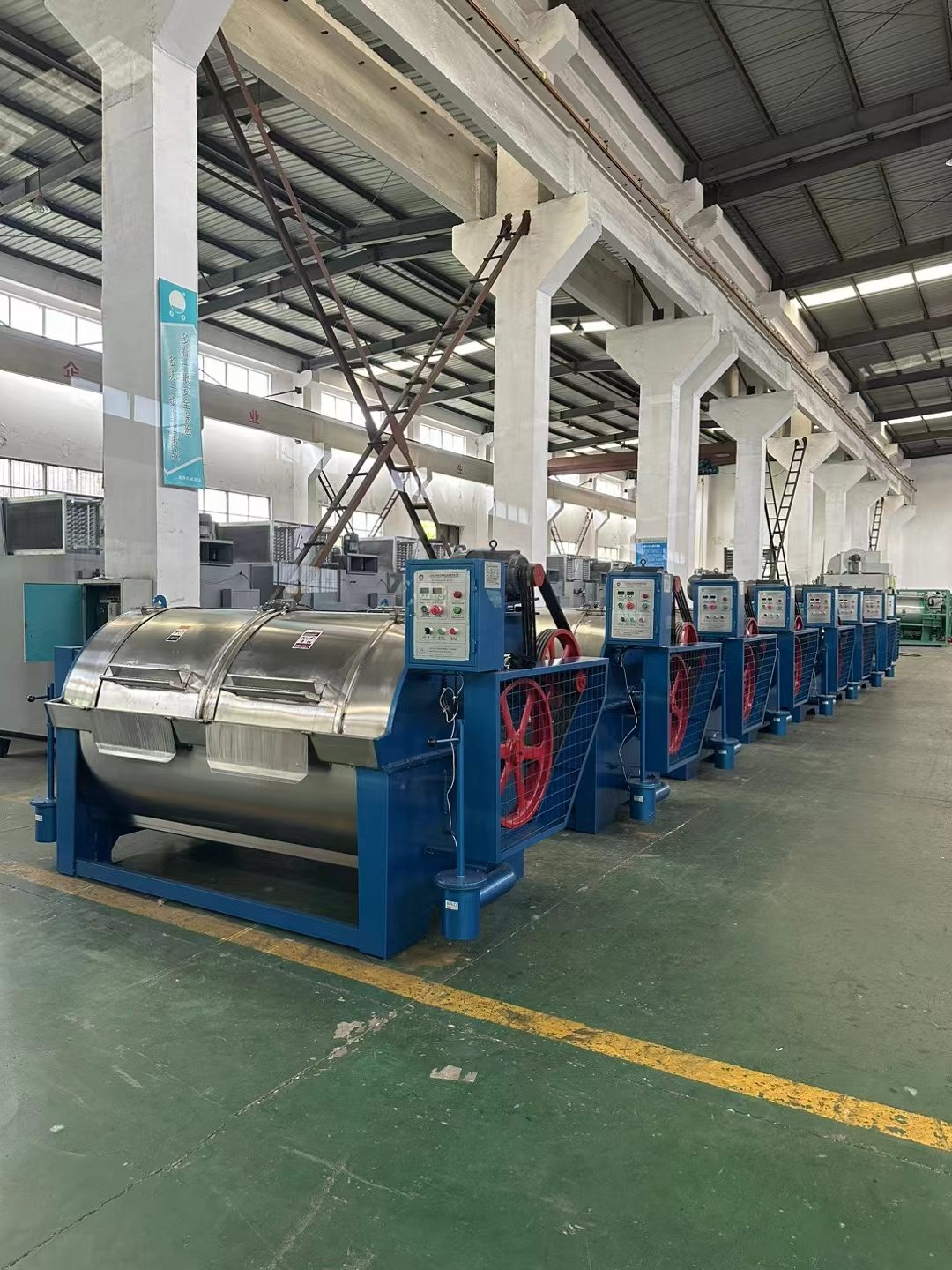
The Industrial Washing Machine discussed here is a horizontal industrial washing machine for batch textile washing. Its role is washing rather than integrated high-speed extraction. After washing, textiles can move to a separate Hydro Extractor and then to drying or other processing.
This arrangement can fit garment plants, workwear, mats, heavy textile batches, and lines with separate extraction. Because textile washing machine can describe several machine types, confirm drum structure, extraction, controls, heating, and process instead of relying on the name.
Feature Comparison
Quick Answer: The primary difference is integrated extraction versus a separate extraction stage; this affects handling, layout, labor, and downstream moisture.
Workflow Comparison
Quick Answer: Washer extractor workflow uses fewer wet-load transfers; horizontal washing separates washing and extraction into distinct stages.
Two laundry workflowsCompare before capacity
| Washer Extractor | Sorting → Washing and Extraction → Drying or Finishing → Folding / Storage |
| Industrial Washing Machine | Sorting → Horizontal Washing → Hydro Extraction → Drying or Processing → Folding / Storage |
Separate extraction adds a wet-load transfer that may suit a plant designed for carts, lifting, and batch processing. Integrated extraction can reduce movement. Compare loading, waiting, drainage, handling, and dryer demand across the complete line.
Capacity Comparison
Quick Answer: Compare realistic batch weight and total process cycles, not nominal washing capacity alone.
A high-capacity washing machine does not create high plant output if the hydro extractor or dryer cannot receive its batches. Similarly, a washer extractor does not solve a bottleneck caused by limited drying, ironing, folding, or storage. Build a process worksheet for each textile category.
Application Comparison
Quick Answer: Integrated washer extraction often fits institutional linen workflows, while separate washing and extraction may fit heavy industrial or textile processing.
Hotels
Hotels often prioritize predictable turnaround and limited handling. A washer extractor can reduce transfers before drying or finishing. Review the Hotel Laundry Solution, occupancy, textile mix, shifts, and utilities.
Hospitals
Healthcare projects should map separation, washing, extraction, drying, finishing, and storage. Integrated extraction may simplify wet handling; separate lines require planned transfers. The Hospital Laundry Solution provides context.
Commercial Laundry Plants
Commercial plants may use either architecture. Customer diversity can favor multiple washer extractors; large or specialized loads may support separate washing and extraction. Review the Commercial Laundry Solution.
Garment Factories
Garment processing may include workwear, uniforms, denim, or production batches. Horizontal washing may suit a line with separate hydro extraction, subject to textile and process confirmation.
Textile Factories
A textile factory may prioritize bulky batches and separate extraction or drying. Engineers should define material, batch density, process steps, handling, and required output condition.
Pros and Cons
Quick Answer: Washer extractors reduce process steps; separate washing systems can provide line flexibility but require more handling and coordination.
| Washer extractor advantages | Integrated extraction, fewer wet transfers, compact process, programmable wash-and-extract sequence |
| Washer extractor tradeoffs | Capacity and extraction are tied to one machine; model, floor, utilities, and service needs still require review |
| Industrial washing machine advantages | Heavy batch washing and separate process stages can suit specialized plant layouts |
| Industrial washing machine tradeoffs | Requires planned hydro extraction, wet-load transfer, added floor space, labor, and scheduling |
Maintenance Comparison
Quick Answer: Compare the total number of machines, transfer equipment, moving systems, and service tasks across the complete workflow.
Buying Checklist
Quick Answer: Provide enough project data to compare two workflows on the same operating basis.
Common Mistakes
Quick Answer: Most selection errors come from comparing machine labels instead of complete process requirements.
- Assuming the names are interchangeable. Confirm whether high-speed extraction is integrated.
- Comparing nominal capacity alone. Include washing, extraction, transfer, and dryer cycle timing.
- Ignoring textile bulk. Equal dry weight does not mean equal drum loading behavior.
- Forgetting wet-load handling. Separate extraction needs carts, labor, space, and safe procedures.
- Ignoring downstream moisture. Extraction affects dryer workload and production balance.
- Choosing by purchase price only. Compare all required machines, utilities, installation, and operation.
- Overlooking floor and access. Separate stages need delivery routes, loading space, and service clearance.
- Requesting a quotation without project data. Missing textiles, capacity, utilities, and workflow creates assumptions.
Decision Tree: Which Machine Should I Choose?
Quick Answer: Start with whether integrated extraction is required, then test textile, handling, space, and capacity conditions.
Washer Extractor or Industrial Washing Machine?5 questions
| 1 | Do you want washing and high-speed extraction in one machine? | Yes → Consider a washer extractor. No → Continue. |
| 2 | Is a separate hydro extraction stage already planned? | Yes → Consider a horizontal industrial washing machine. No → Review integrated extraction. |
| 3 | Are loads mainly hotel, hospital, or mixed commercial linen with limited wet handling? | Yes → Washer extractor may simplify the workflow. |
| 4 | Are loads bulky garments, workwear, mats, or process textiles in a dedicated line? | Yes → Horizontal washing plus separate extraction may fit the process. |
| 5 | Do space, labor, utilities, and downstream capacity support the chosen route? | No → Revise the line before selecting a model. Yes → Compare model-specific data. |
Key Takeaways
Quick Answer: The choice is between integrated and separated workflow architecture, not simply two machine names.
- ✓ A washer extractor combines washing, rinsing, and spin extraction.
- ✓ A horizontal industrial washing machine may require a separate hydro extractor.
- ✓ Hotels and hospitals often value reduced wet-textile transfer.
- ✓ Garment and textile plants may value separated heavy-batch processing.
- ✓ Nominal capacity must be tested against total process cycle time.
- ✓ Remaining moisture influences dryer workload and workflow balance.
- ✓ Floor space, labor, utilities, and maintenance differ between the two routes.
- ✓ Final selection requires textile and model-specific technical confirmation.
Frequently Asked Questions
Quick Answer: These answers provide selection direction; final configuration still requires project and model confirmation.
What is the difference between a washer extractor and an industrial washing machine?
A washer extractor combines washing and spin extraction in one machine. The horizontal industrial washing machine discussed here performs washing and can use a separate hydro extractor. This changes handling, floor space, labor, scheduling, and the moisture condition entering the dryer.
Which machine is more suitable for hotels?
A washer extractor often supports compact hotel workflows because it reduces wet-load transfer before drying or finishing. However, the choice depends on linen volume, textile mix, existing equipment, utilities, room layout, operating hours, and the planned extraction method.
Which machine is more suitable for textile factories?
A horizontal industrial washing machine may fit bulky or process-oriented textile batches when a separate hydro extractor is planned. An integrated washer extractor can also be considered where textile characteristics and process requirements support it. Engineers should define the complete production route.
Can an industrial washing machine replace a washer extractor?
It can replace the washing function, but it does not automatically replace integrated high-speed extraction. If the process requires moisture removal before drying, a separate hydro extractor or another confirmed extraction arrangement may be needed.
How do I choose the correct capacity?
Record dry kg per batch and day, textile bulk, peak loads, hours, shifts, and realistic cycles. For separate systems, include transfer and hydro extraction time. Then match output with dryers, finishing equipment, labor, utilities, and storage.
Do both machines need a tumble dryer?
Not every textile follows the same finishing route, but many laundry loads require drying after extraction. Dryer selection depends on textile type, retained moisture, required final condition, and production plan. Compare the full line rather than assuming one fixed pairing.
Which option uses less floor space?
An integrated washer extractor can reduce the number of separate process machines. Actual footprint still depends on model dimensions, loading and service clearance, carts, utilities, and downstream equipment. A separate line needs space for washing, transfer, and hydro extraction.
What information should I provide before requesting a quotation?
Provide country, textile types, dry batch and daily volume, voltage, frequency, water, drainage, heating or steam, room dimensions, operating hours, desired extraction route, and downstream equipment. This allows both options to be compared on the same basis.
Conclusion
Quick Answer: Choose a washer extractor for integrated washing and extraction; choose a horizontal washing machine when a separate extraction line better fits the textiles and plant.
The washer extractor vs washing machine decision should begin with the production sequence. Define textiles, batch size, daily volume, operators, wet-load transfer, floor space, utilities, extraction target, dryer capacity, and finishing steps. Compare every required machine and connection, not only the washing unit.
For deeper selection criteria, read the Industrial Washer Extractor Buying Guide, Industrial Tumble Dryer Buying Guide, and Flatwork Ironer Buying Guide. Submit project details through Contact for a configuration discussion.