Quick Answer: Plan a commercial laundry plant from customer textiles, daily and peak volume, required processing stages, operating hours, utilities, floor space, and dispatch needs, then balance every machine around the resulting workflow. Confirm the final equipment plan against customer demand, site utilities, room conditions, and model-specific information before ordering.
Executive Summary
This guide is for commercial laundry owners, linen rental operators, project contractors, consultants, investors, and equipment distributors planning a commercial laundry system. The main decision is how to combine washing, extraction, drying, ironing, folding, packing, storage, and material handling so no single stage restricts the planned output. Buyers should define the textile and customer mix, estimate daily and peak batches, separate tumble-dried loads from flatwork loads, and verify utilities and installation access before comparing machinery. The expected outcome is a documented laundry plant workflow, a balanced equipment shortlist, and a buyer checklist that supports comparable supplier quotations. Final configuration should be confirmed against selected models, available services, room conditions, staffing, and project requirements.
Quick Answer: Use this contents list to review commercial laundry plant definitions, workflow, core equipment, capacity, utilities, selection criteria, buyer checks, common mistakes, frequently asked questions, and the final inquiry step. Confirm the final equipment plan against customer demand, site utilities, room conditions, and model-specific information before ordering.
Table of Contents
Quick Answer: Commercial laundry equipment should be evaluated as one production system. Customer type, textile mix, receiving peaks, washing batches, drying and finishing demand, utilities, labor, storage, and dispatch all influence the machine combination. Confirm the final equipment plan against customer demand, site utilities, room conditions, and model-specific information before ordering.
Introduction
Technical Editorial Team, HAIDI Laundry Equipment. This guide is organized from industrial laundry equipment project experience and practical equipment configuration discussions.
Buying commercial laundry plant equipment is different from buying one washer or one dryer. A laundry plant normally handles continuous textile flow from receiving to sorting, washing, extraction, drying, ironing, folding, packing, and dispatch. If one stage is selected without considering the next stage, the plant may experience waiting time, overloaded operators, slow drying, unfinished flat linen, or crowded storage space.
This guide explains how to think about commercial laundry equipment as a complete system. It is written for laundry plant owners, linen rental companies, hotel laundry service providers, industrial textile washing facilities, uniform processing businesses, project contractors, and overseas distributors. It does not provide prices, fixed lead times, unconfirmed certifications, or project claims. The purpose is to help buyers understand the main industrial laundry equipment categories and prepare better information before requesting a quotation.
Quick Answer: A commercial plant may require washer extractors or separate washing and extraction, tumble dryers, flatwork ironers, folding equipment, carts, sorting areas, packing space, and clean storage. The exact list follows the textile workflow. Confirm the final equipment plan against customer demand, site utilities, room conditions, and model-specific information before ordering.
What Equipment Does a Commercial Laundry Plant Need?
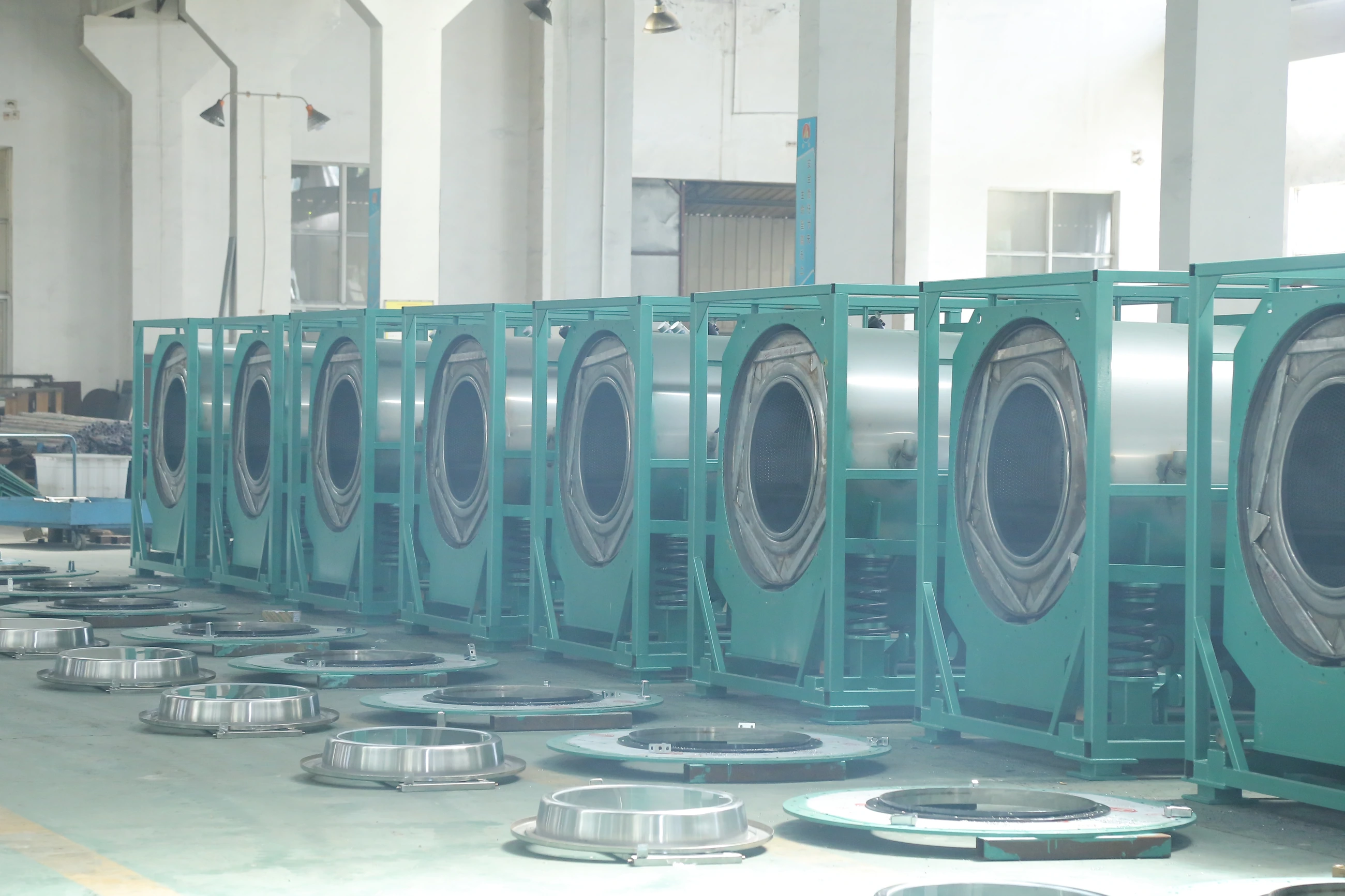
A commercial laundry plant usually needs equipment for washing, moisture reduction, drying, flat linen finishing, folding, packing, and material handling. The exact equipment list depends on the type of textile being processed. A plant that mainly washes hotel towels may need strong washing and drying capacity. A linen rental plant processing bed sheets and table linen may need a balanced line with washer extractors, tumble dryers, flatwork ironers, and laundry folding machine support.
A typical commercial laundry system may include an industrial washer extractor, hydro extractor when separate moisture reduction is needed, tumble dryer, flatwork ironer, laundry folding machine, carts, sorting tables, storage shelves, and space for packing or dispatch. Some facilities use washer extractors as the core washing machine because they combine washing and extraction in one unit. Other facilities may use industrial washing machines with separate hydro extractors, especially when the workflow is designed around separate washing and extraction stages.
For a complete solution view, buyers can compare this guide with the Commercial Laundry Equipment Solution page, where equipment categories are organized around laundry plant project planning.
Quick Answer: The typical workflow moves textiles through receiving, sorting, washing, extraction, drying or flatwork finishing, folding, packing, clean storage, and dispatch. Capacity and handling should remain balanced across all stages. Confirm the final equipment plan against customer demand, site utilities, room conditions, and model-specific information before ordering.
Typical Laundry Plant Workflow
A laundry plant workflow begins when dirty textiles arrive from hotels, hospitals, factories, restaurants, rental customers, or internal departments. The receiving area should have enough room for carts, bags, weighing, labeling, and temporary holding. From there, textiles move to sorting, where operators separate loads by customer, fabric type, color, soil level, washing method, drying method, and finishing requirement.
After sorting, textiles move into washing. The washing stage must be planned together with extraction and drying. If washing output is higher than extraction or dryer capacity, wet textiles will wait between stages. After moisture reduction, towels, uniforms, mats, and mixed loads usually move to tumble drying. Bed sheets, duvet covers, pillowcases, and table linen may move to ironing, folding, packing, and clean storage. A practical plant layout should keep the flow easy to follow and reduce unnecessary backtracking.
Laundry plant workflow8 stages
| 1 | Dirty Textile Receiving |
| 2 | Sorting |
| 3 | Washing |
| 4 | Hydro Extraction |
| 5 | Drying |
| 6 | Ironing |
| 7 | Folding / Packing |
| 8 | Clean Textile Storage |
Quick Answer: Core equipment usually covers washing and moisture reduction, tumble drying for appropriate textiles, flatwork ironing for sheets and table linen, and folding support where manual handling would limit output. Confirm the final equipment plan against customer demand, site utilities, room conditions, and model-specific information before ordering.
Core Commercial Laundry Equipment List
The first core machine is usually the industrial washer extractor. It handles washing and high-speed extraction in one machine, which can reduce textile moisture before drying. The buyer should choose capacity according to daily laundry volume, textile type, batch size, operating hours, and future growth. In a commercial laundry plant, washer output should be compared with dryer and finishing output rather than viewed alone.
A hydro extractor may be considered when the plant separates washing and extraction or when additional moisture reduction is useful before drying. Its role is mechanical moisture reduction. It can help reduce dryer workload when the workflow and textile type require it, but the need should be confirmed according to the actual equipment combination.
The tumble dryer is important for towels, uniforms, workwear, robes, mats, and mixed textile loads. Dryer capacity should match washer or hydro extractor output, moisture level, heating source, ventilation, and daily production targets. The flatwork ironer is used for flat linen such as bed sheets, duvet covers, pillowcases, and table linen. A laundry folding machine may be added when flat linen volume is high and manual folding becomes a bottleneck.
Quick Answer: Calculate capacity from daily volume, textile categories, realistic batches, peak receiving periods, operating hours, and finishing demand. Match hourly output between washing, extraction, drying, ironing, folding, and storage rather than maximizing one machine. Confirm the final equipment plan against customer demand, site utilities, room conditions, and model-specific information before ordering.
How to Plan Equipment Capacity
Capacity planning should begin with the textile mix. A plant processing mostly towels will have different drying needs from a plant processing mostly sheets. A uniform washing facility may require different batch planning from a linen rental business. Before choosing equipment, buyers should estimate daily kg, number of batches, textile categories, peak receiving time, working hours, drying requirements, ironing volume, and packing or dispatch needs.
The main goal is balance. A large washer extractor does not solve the project if dryers cannot keep up. A strong dryer line does not help if sorted textiles wait too long before washing. A flatwork ironer may become the limiting stage if the plant processes a high volume of bed sheets or table linen. For this reason, commercial laundry plant equipment should be planned as a sequence of matching capacities.
Buyers should also consider future expansion. Some laundry plants start with a limited customer base and later add hotel linen, hospital linen, uniforms, or rental contracts. If expansion is likely, the equipment layout should leave space for additional machines, operator routes, carts, service access, and clean storage. Final capacity selection should be confirmed with model details and project requirements before ordering.
Quick Answer: Confirm voltage, frequency, water, drainage, steam, gas, electrical heating capacity, ventilation, access routes, room dimensions, and maintenance clearance before equipment selection. Installation limits can determine which configurations are practical. Confirm the final equipment plan against customer demand, site utilities, room conditions, and model-specific information before ordering.
Utility and Installation Requirements
Utility planning affects both equipment selection and layout. Commercial laundry equipment may require power supply, water, drainage, steam, gas, electric heating, compressed air in some project setups, ventilation, and maintenance access. Exact requirements depend on selected models and local project conditions, so buyers should not finalize equipment without confirming available utilities.
Washing equipment requires water supply, drainage, power, and enough loading and unloading space. Tumble dryers require suitable heating source and ventilation. Flatwork ironers require heating source, feed space, discharge space, and operator access. Folding equipment requires enough room after ironing so flat linen can move smoothly into packing or storage. If the building has limited door access or ceiling height, machine movement and installation should be reviewed before purchase.
A useful quotation request should include country, voltage, available heating source, water and drainage conditions, room size, floor access, and whether the plant needs single machines or a complete line. This helps the supplier discuss a practical configuration instead of guessing from equipment names only.
Quick Answer: Use the table to connect each workflow stage with its equipment role and required buyer information. It provides a common basis for discussing capacity, utilities, handling, and project scope with suppliers. Confirm the final equipment plan against customer demand, site utilities, room conditions, and model-specific information before ordering.
Equipment Selection Table
The following table summarizes how each workflow stage connects with equipment selection. It does not replace model confirmation or engineering review, but it helps buyers prepare the basic information needed for a commercial laundry equipment quotation.
Quick Answer: Prepare volume, textiles, customer types, operating hours, heating, utilities, floor space, access, and expansion plans before requesting prices. Complete inputs make quotations more comparable and reduce configuration assumptions. Confirm the final equipment plan against customer demand, site utilities, room conditions, and model-specific information before ordering.
Buying Checks Before Quotation
A clear buying checklist helps reduce repeated communication and makes equipment recommendations more accurate. Before requesting a quotation, the buyer should prepare information about the business type, daily laundry volume, textile mix, workflow, utilities, available space, and whether the project needs an equipment upgrade or a new laundry plant.
Buyer Checklist
Quick Answer: Avoid sizing isolated machines, treating all textiles alike, ignoring utility and access limits, underestimating finishing or storage, and requesting quotations without a written workflow and consistent project information. Confirm the final equipment plan against customer demand, site utilities, room conditions, and model-specific information before ordering.
Common Buying Mistakes
One common mistake is choosing machines only by single-machine capacity. A washer extractor, tumble dryer, hydro extractor, flatwork ironer, and folding machine must be evaluated together. If the washing stage produces more wet textiles than dryers can handle, the plant slows down. If flat linen volume is high but finishing equipment is limited, clean sheet output may become the bottleneck.
Another mistake is ignoring the difference between textile categories. Towels, sheets, uniforms, workwear, mats, and table linen do not move through the same process in the same way. Towels usually depend heavily on drying capacity. Sheets and table linen may need ironing and folding. Workwear and industrial textiles may require different batch handling from hotel linen. A buyer should define the textile mix before discussing machines.
A third mistake is requesting a price before preparing project information. Without country, voltage, utility conditions, daily capacity, textile type, floor space, and workflow goals, the quotation may be too general. Better preparation helps the supplier discuss a more suitable commercial laundry plant equipment combination and reduces the risk of comparing incomplete offers.
Quick Answer: These answers cover the main plant equipment, capacity planning, hydro extractor need, flatwork ironing, and quotation information that commercial laundry buyers commonly need to clarify during early project planning. Confirm the final equipment plan against customer demand, site utilities, room conditions, and model-specific information before ordering.
FAQ
What equipment is needed for a commercial laundry plant?
A commercial laundry plant may need washer extractors, hydro extractors when separate extraction is required, tumble dryers, flatwork ironers, laundry folding machines, sorting areas, carts, packing space, and clean storage. The final list depends on textile type, daily volume, workflow, utilities, and floor space.
How do I choose capacity for commercial laundry equipment?
Start with daily kg, textile categories, batch size, working hours, drying needs, ironing volume, and packing requirements. Then match each stage so washing, extraction, drying, ironing, and folding can move at a practical pace without one stage becoming a bottleneck.
Does every laundry plant need a hydro extractor?
Not every plant needs a separate hydro extractor. It may be useful when washing and extraction are separated or when additional moisture reduction supports the drying workflow. The need should be reviewed according to washer type, textile moisture, dryer capacity, floor space, and handling method.
When is a flatwork ironer important in a laundry plant?
A flatwork ironer is important when the plant processes sheets, duvet covers, pillowcases, table linen, or other flat textiles. Buyers should confirm linen width, daily flat linen volume, heating source, roller quantity, and whether folding equipment will be used after ironing.
What information should be prepared before requesting a quotation?
Prepare country, project type, daily laundry volume, textile type, required equipment, voltage, heating source, water and drainage conditions, ventilation, floor space, operating hours, and future expansion plan. Clear information helps the supplier discuss a practical equipment configuration.
Quick Answer: A practical commercial laundry project converts verified customer demand and textile flow into balanced equipment capacity, workable utilities, efficient handling, and enough space for clean output and future development. Confirm the final equipment plan against customer demand, site utilities, room conditions, and model-specific information before ordering.
Key Takeaways
- Define customers, textile categories, daily volume, and peak receiving periods.
- Map receiving, sorting, washing, extraction, drying, finishing, packing, and storage.
- Balance output across machines instead of maximizing one production stage.
- Separate tumble-dried textiles from flatwork ironing and folding demand.
- Confirm all utilities, ventilation, access routes, and maintenance clearance.
- Reserve handling, packing, clean storage, and future expansion space.
- Compare supplier proposals against one consistent written buyer checklist.
Quick Answer: Before requesting a commercial laundry configuration, prepare the customer and textile mix, daily volume, operating hours, utilities, floor plan, existing equipment, required machines, and future expansion expectations. Confirm the final equipment plan against customer demand, site utilities, room conditions, and model-specific information before ordering.
CTA
A commercial laundry system should be planned around the full textile flow, not around isolated machine names. Receiving, sorting, washing, hydro extraction, drying, ironing, folding, packing, and clean storage all influence equipment selection. When each stage is matched with the next, buyers can compare equipment recommendations more clearly and prepare more useful quotation requests.
For laundry plant owners, project contractors, consultants, and distributors, the next step is to prepare the core project details: daily laundry volume, textile type, country, utilities, floor space, and required equipment. HAIDI can review this information and discuss a practical equipment configuration for commercial laundry projects.
Request Commercial Laundry Equipment Configuration