Quick Answer: Plan a hospital laundry as one connected textile workflow, then size washing, extraction, drying, finishing, handling, and storage around verified daily volume, textile categories, operating hours, utilities, and available space. Confirm the final equipment sequence against facility procedures, site utilities, room conditions, and model-specific information before ordering.
Executive Summary
This guide is for hospital procurement managers, healthcare laundry managers, project contractors, consultants, and equipment distributors planning a hospital laundry system. The main decision is not which individual machine appears largest, but whether each workflow stage can accept the output of the previous stage without creating avoidable handling or waiting. Buyers should define dirty linen collection, sorting rules, washing batches, moisture reduction, drying, flatwork finishing, and clean storage before comparing equipment. The expected outcome is a documented hospital laundry workflow with balanced equipment roles, practical utility requirements, and a clear list of project information for supplier discussions. Final configuration should remain aligned with local facility procedures, engineering review, textile requirements, and available site conditions.
Quick Answer: Use this contents list to move from overall hospital laundry planning through each textile-processing stage, equipment configuration, buyer checks, frequently asked questions, and the final procurement summary. Confirm the final equipment sequence against facility procedures, site utilities, room conditions, and model-specific information before ordering.
Table of Contents
Quick Answer: Hospital laundry planning starts with the complete movement of textiles, not a machine list. Procurement teams should map how used linen becomes sorted, washed, moisture-reduced, dried or finished, stored, and returned for distribution. Confirm the final equipment sequence against facility procedures, site utilities, room conditions, and model-specific information before ordering.
Introduction
Technical Editorial Team, HAIDI Laundry Equipment. This guide is organized from industrial laundry equipment project experience and practical equipment configuration discussions.
A hospital laundry system is not simply a room filled with washing machines. It is a controlled workflow that receives used textiles, separates them by type and handling requirement, washes them, reduces moisture, dries or finishes them, and returns clean linen to storage or distribution. For hospital procurement managers and laundry project contractors, understanding the full hospital laundry workflow is often more important than comparing one machine model at a time.
The purpose of this guide is to explain how a practical hospital laundry system works from dirty linen collection to clean linen output. It does not replace local healthcare procedures, hygiene policies, engineering review, or professional site planning. Instead, it gives buyers a clear equipment planning framework and explains how a hospital washer extractor, hospital laundry hydro extractor, hospital tumble dryer, and flatwork ironer can work together in a complete healthcare laundry equipment line.
Quick Answer: A hospital laundry system connects receiving, sorting, washing, extraction, drying, finishing, storage, and dispatch. Equipment should be selected as a balanced sequence so that capacity, operator movement, and available utilities support the entire textile route. Confirm the final equipment sequence against facility procedures, site utilities, room conditions, and model-specific information before ordering.
Hospital Laundry System Overview
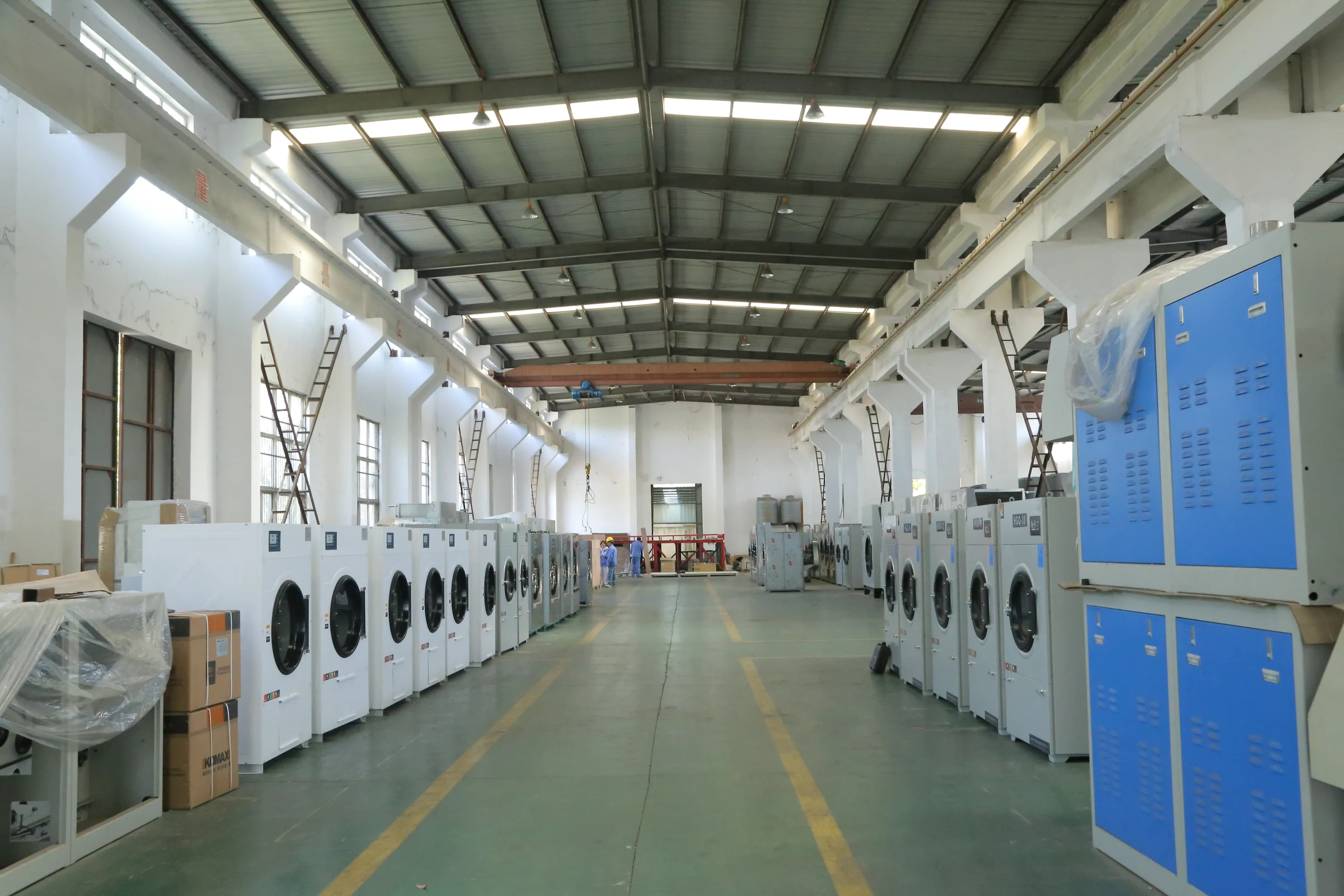
A hospital laundry system normally includes several linked areas: dirty linen receiving, sorting, washing, extraction, drying, ironing or finishing, folding, clean linen storage, and dispatch. The layout should reduce unnecessary movement, keep workflows understandable for operators, and match each machine stage with the next stage so that one process does not become a bottleneck.
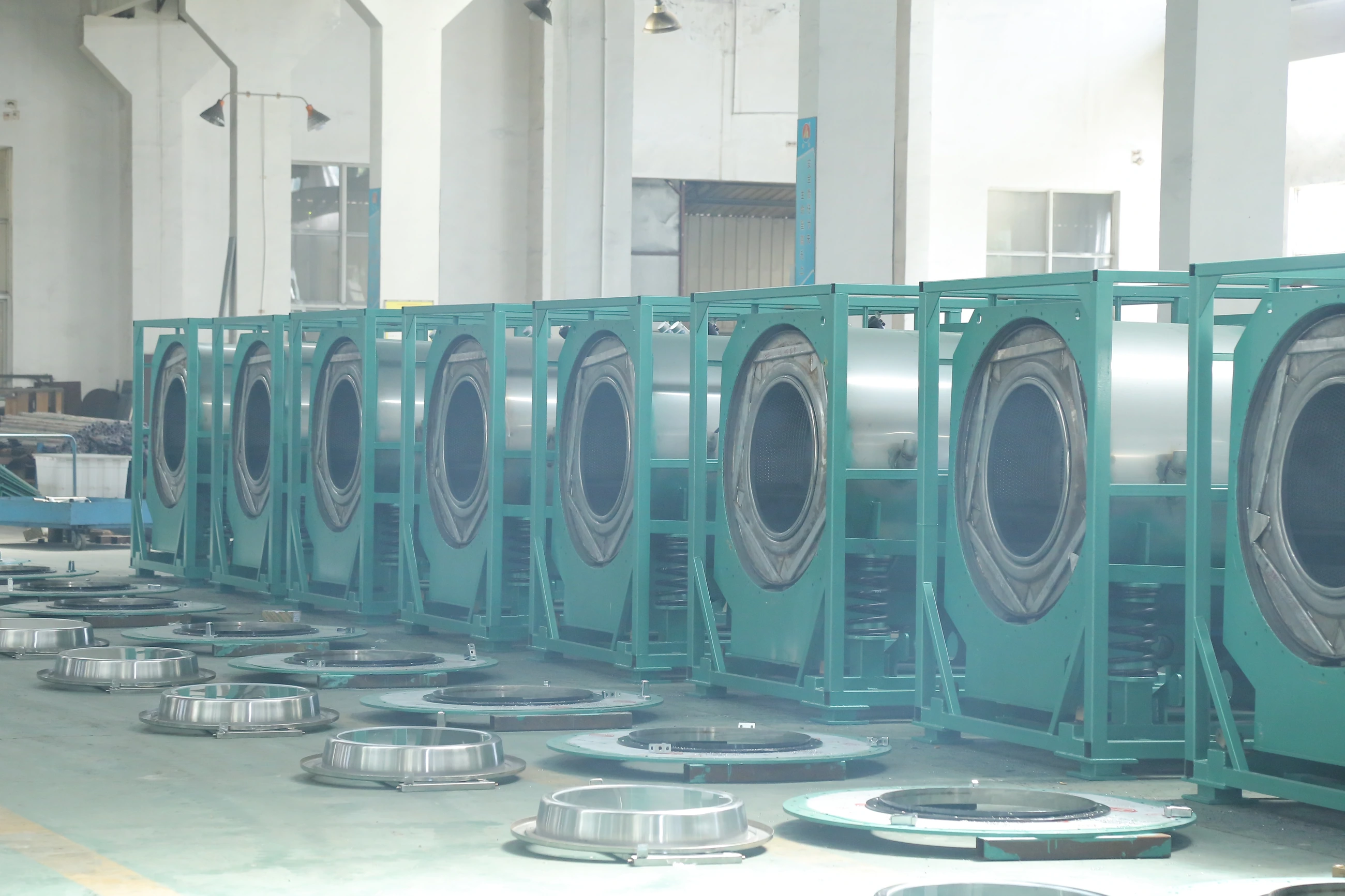
The main equipment categories are usually selected according to textile type and daily volume. Washer extractors handle washing and high-speed extraction in one machine. Hydro extractors can be used when separate moisture reduction is part of the process. Tumble dryers handle towels, uniforms, patient garments, and mixed textile loads that need drum drying. Flatwork ironers are used for sheets, bed linen, pillowcases, table linen, and other flat textiles that require organized finishing.
For a complete project view, buyers can compare this guide with the Hospital Laundry Solution page, where the equipment categories are organized around healthcare laundry project planning.
Hospital laundry workflow7 stages
| 1 | Dirty Linen Collection |
| 2 | Sorting |
| 3 | Washing |
| 4 | Hydro Extraction |
| 5 | Drying |
| 6 | Ironing / Finishing |
| 7 | Clean Linen Storage |
Quick Answer: Define collection points, textile categories, transfer methods, peak receiving periods, and batch information before sizing equipment. Collection patterns determine when laundry reaches the plant and how much washing capacity must be available at one time. Confirm the final equipment sequence against facility procedures, site utilities, room conditions, and model-specific information before ordering.
Dirty Linen Collection
The workflow starts before the laundry room. Used hospital textiles may include bed sheets, blankets, pillowcases, towels, patient garments, staff uniforms, gowns, curtains, cleaning textiles, and other washable items. Collection planning should define where textiles are gathered, how carts or bags are used, how loads are transferred, and how information about textile type or department source is kept clear.
From an equipment planning point of view, dirty linen collection affects capacity. A hospital that receives large batches at specific times of day may need larger washing capacity or more balanced batch scheduling. A facility with continuous textile flow may prefer a workflow that spreads load handling across more operating hours. Buyers should estimate daily weight, peak batch volume, textile categories, and working hours before choosing hospital laundry equipment.
Quick Answer: Sort textiles according to material, color, soil level, washing program, drying method, and finishing requirement. Clear sorting protects workflow consistency and gives buyers a more accurate basis for washer, dryer, extractor, and ironer planning. Confirm the final equipment sequence against facility procedures, site utilities, room conditions, and model-specific information before ordering.
Sorting Procedures
Sorting is the point where laundry planning becomes operational. Textiles may be separated by material, color, soil level, department, washing program, drying method, or finishing requirement. The sorting area should be easy for staff to understand because incorrect sorting can reduce workflow efficiency and make equipment matching harder.
For example, towels and uniforms may move toward washing and tumble drying, while bed sheets and other flat linen may later require ironing and finishing. Some textiles may be too bulky for small-capacity equipment, while others need careful loading to avoid unbalanced batches. Sorting decisions therefore influence washer capacity, dryer volume, flatwork ironer width, and whether a separate hydro extractor is useful.
Quick Answer: Select the washing process from daily linen weight, realistic batch size, textile categories, working hours, and the required downstream output. Washer capacity should always be checked against extraction, drying, and finishing capacity. Confirm the final equipment sequence against facility procedures, site utilities, room conditions, and model-specific information before ordering.
Washing Process
The washing stage is usually the core of the hospital laundry workflow. A hospital washer extractor combines washing and spin extraction in one machine, which can simplify the workflow when space and labor need to be controlled. Buyers should choose washer extractor capacity according to daily linen volume, batch size, textile type, operating hours, and future growth.
For hospital laundries, the washing process should be planned around practical load management. Heavy sheets, towels, uniforms, and mixed textiles may require different batch planning. The selected washer extractor should also be matched with the next stage. If washing output is higher than drying or finishing output, clean workflow can slow down even when the washer capacity looks sufficient on paper.
Some projects may also use an industrial washing machine with a separate hydro extractor, especially when the buyer already plans separate moisture extraction after washing. The right choice depends on project workflow, available floor space, utility conditions, and operator process design.
Quick Answer: Match tumble dryer capacity with washer output, moisture remaining after extraction, textile type, heating source, ventilation, and operating schedule. Drying should not become the waiting point between washing and clean-textile handling. Confirm the final equipment sequence against facility procedures, site utilities, room conditions, and model-specific information before ordering.
Drying Process
The drying stage usually handles towels, gowns, uniforms, patient garments, blankets, and other items that are not processed through a flatwork ironer. A hospital tumble dryer should be selected according to washer output, moisture after extraction, textile type, heating source, drum volume, and available ventilation conditions.
Drying capacity should not be selected in isolation. If the washer extractor processes more batches per hour than the dryer can handle, wet textiles may wait between stages. If the dryer is oversized but the washing capacity is limited, equipment may be underused. A balanced healthcare laundry equipment configuration considers batch timing, daily production target, operator movement, and drying requirements together.
Heating source is another important planning point. Depending on project conditions, dryers may need gas, steam, or electric heating configuration. The suitable option depends on local utilities and project requirements, so buyers should confirm available utilities before final equipment selection.
Quick Answer: Use flatwork finishing for sheets and other flat linen that require organized presentation and folding. Selection depends on linen dimensions, daily piece volume, heating source, roller arrangement, operator access, and downstream storage. Confirm the final equipment sequence against facility procedures, site utilities, room conditions, and model-specific information before ordering.
Ironing and Finishing
Not every hospital textile needs the same finishing process. Towels and uniforms may move from drying to folding or storage. Bed sheets, pillowcases, duvet covers, and other flat linen may need ironing or finishing to improve presentation, folding consistency, and storage handling. This is where a flatwork ironer becomes part of the hospital laundry system.
A flatwork ironer is selected according to linen width, heating source, roller quantity, available space, and required output. Hospital laundry buyers should review sheet size and daily flat linen volume before choosing an ironer. If the project also includes folding equipment, the ironer output and folding workflow should be planned together so finished linen moves smoothly into storage or dispatch.
Flatwork finishing should be understood as a production and handling process. It supports organized linen preparation but should not be used to make unconfirmed claims about medical sterilization or compliance. Local procedures and hospital policies should always guide final workflow requirements.
Quick Answer: Reserve clean storage, packing space, carts, shelves, and a practical dispatch route before fixing the machine layout. Storage capacity and movement routes affect whether finished linen can leave production without congestion. Confirm the final equipment sequence against facility procedures, site utilities, room conditions, and model-specific information before ordering.
Clean Linen Storage
Clean linen storage is the final stage of the laundry process, but it should be considered at the beginning of project planning. Clean storage needs enough space for finished textiles, carts, shelves, packing work, and dispatch organization. If clean storage is too small, the laundry may become crowded even when all machines are operating normally.
A good workflow separates clean linen movement from dirty linen receiving as much as the project layout allows. Clean textiles should be easy to identify and move to departments without unnecessary handling. From a procurement perspective, this means the machine layout, finishing process, folding area, and storage area should be discussed as one system rather than separate purchases.
Quick Answer: Configure equipment from the actual textile mix and required workflow: washing first, separate extraction only when needed, drying for suitable loads, flatwork finishing for sheets, and sufficient handling and storage around every machine stage. Confirm the final equipment sequence against facility procedures, site utilities, room conditions, and model-specific information before ordering.
Recommended Equipment Configuration
There is no single equipment list that fits every hospital laundry. A small clinic, a nursing home, a regional hospital, and a medical textile service provider may all require different capacity planning. Still, a typical hospital laundry system may include washer extractors, hydro extractors when separate extraction is required, tumble dryers, flatwork ironers, finishing tables, carts, storage space, and supporting utilities.
A compact hospital laundry may focus on washer extractor and tumble dryer capacity first, then add flatwork ironing if sheet volume requires it. A medium healthcare laundry may need a more balanced line with washer extractors, dryers, flatwork finishing, and clear clean storage. A larger project may require multiple machines in each stage so washing, extraction, drying, and finishing can operate without long waiting time between processes.
The most practical configuration is one that matches daily linen volume, textile mix, room layout, available utilities, and labor plan. Buyers should avoid selecting machines only by maximum capacity. The better question is whether the complete workflow can move textiles predictably from dirty receiving to clean output during normal operating hours.
Quick Answer: Prepare facility type, daily volume, textile mix, operating hours, space, voltage, heating source, water, drainage, ventilation, current equipment, and expected output. Use those facts to compare complete configurations rather than isolated machine ratings. Confirm the final equipment sequence against facility procedures, site utilities, room conditions, and model-specific information before ordering.
How to Select Hospital Laundry Equipment
Hospital laundry equipment selection should start with real project inputs. Useful information includes facility type, estimated kg per day, main textile categories, working hours, available floor space, voltage, heating source, water and drainage conditions, ventilation, clean storage requirements, and whether the buyer needs single machines or a complete system.
Procurement teams should also compare equipment roles. A washer extractor is usually the first major machine in the process. A hydro extractor may be added when separate moisture reduction is useful. A tumble dryer handles textiles that need drum drying. A flatwork ironer handles sheets and flat linen. Each machine should be selected according to what happens before and after it in the workflow.
For project communication, buyers can prepare a simple summary before contacting suppliers: country, facility type, daily linen volume, textile types, equipment already owned, available utilities, and expected capacity. This helps the supplier discuss model matching without guessing. For direct project support, use the Contact page and share the project information clearly.
Quick Answer: A useful hospital laundry inquiry documents demand, textiles, utilities, space, workflow, and the required equipment scope. Completing these checks before quotation reduces assumptions and makes different supplier proposals easier to compare. Confirm the final equipment sequence against facility procedures, site utilities, room conditions, and model-specific information before ordering.
Buyer Checklist
Quick Answer: These questions address the equipment combination, extraction role, washer capacity, flatwork finishing need, and project information most hospital laundry buyers need to clarify before requesting a configuration. Confirm the final equipment sequence against facility procedures, site utilities, room conditions, and model-specific information before ordering.
Frequently Asked Questions
What equipment is included in a hospital laundry system?
A hospital laundry system can include washer extractors, hydro extractors when separate extraction is needed, tumble dryers, flatwork ironers, folding or finishing areas, carts, storage space, and supporting utilities. The final list depends on daily linen volume, textile types, room layout, and workflow requirements.
Why do some hospital laundries use a hydro extractor?
Some hospital laundries use a hydro extractor to reduce moisture content before drying. This can reduce dryer workload and help balance washing, extraction, and drying stages. It is a mechanical moisture reduction process, not a substitute for local hospital procedures or hygiene policies.
How do I choose the right hospital washer extractor capacity?
Start with daily linen weight, textile categories, batch size, operating hours, and future growth. Then compare washer capacity with drying and finishing output. A washer extractor should not be selected alone; it should fit the complete hospital laundry workflow.
Does every hospital laundry need a flatwork ironer?
Not always. A flatwork ironer is mainly used for sheets, pillowcases, duvet covers, table linen, and other flat textiles. If the facility processes a large amount of flat linen, an ironer can support organized finishing. The need depends on linen type and daily volume.
What information should buyers provide before requesting a quotation?
Buyers should provide country, facility type, daily laundry volume, textile type, available utilities, voltage, heating source, floor space, required equipment, and whether they need single machines or a complete laundry system. Clear project data helps suppliers discuss a suitable configuration.
Quick Answer: The strongest procurement plan connects measurable linen demand with a balanced workflow, verified utilities, practical handling, and sufficient clean storage. Machine selection follows those project facts. Confirm the final equipment sequence against facility procedures, site utilities, room conditions, and model-specific information before ordering.
Key Takeaways
- Map the complete dirty-to-clean textile route before comparing machines.
- Calculate demand from daily volume, peak batches, textile mix, and working hours.
- Balance washer output with extraction, drying, and finishing capacity.
- Use a separate hydro extractor only when the planned workflow requires it.
- Confirm voltage, heating source, water, drainage, ventilation, and access.
- Include carts, operator movement, maintenance clearance, and clean storage in the layout.
- Compare quotations against the same written project requirements.
Quick Answer: Choose hospital laundry equipment only after the textile workflow, capacity demand, utilities, and room plan are documented. A balanced system is easier to evaluate, install, operate, and expand than a collection of independently selected machines. Confirm the final equipment sequence against facility procedures, site utilities, room conditions, and model-specific information before ordering.
Conclusion
A hospital laundry system should be planned as a complete workflow, not as a collection of separate machines. Dirty linen collection, sorting, washing, hydro extraction, drying, ironing, finishing, and clean storage all affect equipment selection. When each stage is matched with the next, the laundry room becomes easier to operate and easier to evaluate during procurement.
For overseas buyers, contractors, consultants, and distributors, the safest planning method is to define the workflow first, then select hospital laundry equipment around actual daily volume, textile type, available utilities, and space. HAIDI can discuss practical equipment matching for healthcare laundry equipment projects based on the information buyers provide.
Request Hospital Laundry Equipment Configuration