Introduction
Quick Answer: Choose dryer heating from utilities actually available at the site, then compare installation, ventilation, total demand, workflow, and model compatibility.
Author: Technical Editorial Team, HAIDI Laundry Equipment. This comparison is organized from industrial laundry equipment project experience and practical configuration discussions.
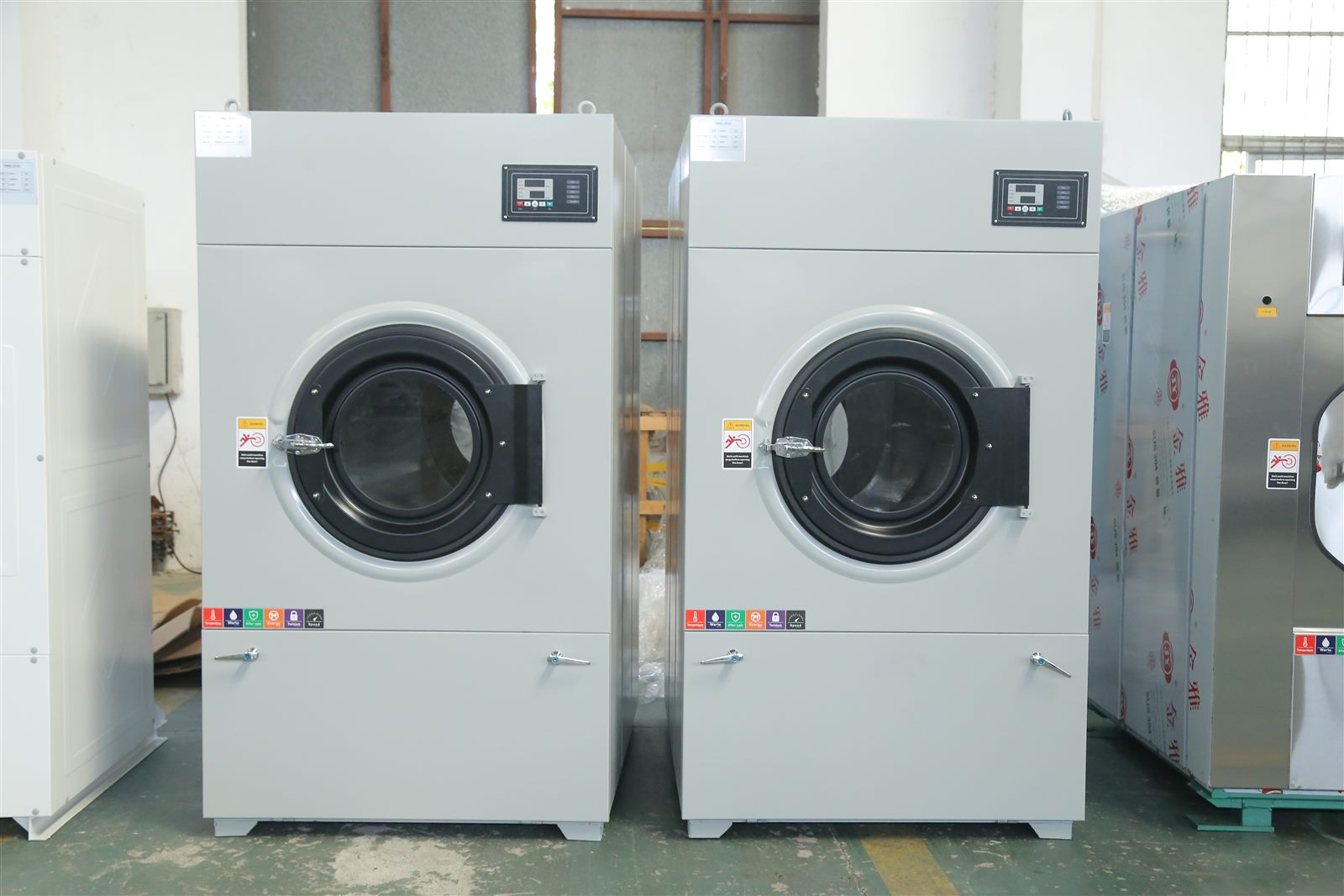
Steam, gas, and electric heating create different requirements for an industrial or commercial tumble dryer. Selection should fit the building, utility supply, dryer model, textile volume, schedule, ventilation, service capability, and local requirements. This guide makes no fixed cost or performance claims.
Executive Summary
Quick Answer: Use steam when a suitable central steam supply exists, consider gas when fuel and combustion arrangements are confirmed, and consider electric heating when the electrical system supports the required load.
A steam tumble dryer uses a compatible steam and heat-exchange system. A gas tumble dryer requires confirmed fuel, combustion air, exhaust, controls, and local review. An electric tumble dryer depends on voltage, frequency, phase, heating load, distribution, and protection. None should be selected from energy price alone. Compare laundry volume, textiles, washer extraction, hours, simultaneous demand, ventilation, exhaust, space, maintenance, and model availability. Final industrial dryer heating selection should use written site data and machine connection requirements.
Definition Box
Quick Answer: The three dryer types perform the same moisture-removal task but use different sources to heat process air.
| Steam Dryer | A dryer using an available steam supply through a compatible heating or heat-exchange arrangement. |
| Gas Dryer | A dryer configured for an applicable gas heating system, subject to model, fuel, combustion-air, exhaust, and local requirements. |
| Electric Dryer | A dryer using electrical heating elements where the model and site electrical system support the required load. |
| Heating Source | The utility or energy input used to raise the temperature of air moving through the dryer. |
| Moisture Removal | The process of moving water from textiles into the airflow and discharging moist air through the designed exhaust path. |
Who Is This Comparison For?
Quick Answer: This guide is for buyers who know their drying requirement but need to select a practical heating configuration.
- Hotel: teams matching towel, robe, mat, and uniform drying with site utilities.
- Hospital: planners integrating drying with documented handling and utility systems.
- Commercial Laundry: operators comparing heating across mixed loads and shifts.
- Laundry Plant: investors reviewing several dryers, demand, ventilation, and expansion.
- Distributor: partners collecting utility and installation data before selection.
- OEM Buyer: buyers confirming configuration, interfaces, documentation, and scope.
Table of Contents
Quick Answer: Start with the three heating definitions, then compare installation, utilities, operation, applications, maintenance, and the final decision matrix.
What Is a Steam Dryer?
Quick Answer: A steam dryer is relevant when the facility has a suitable steam system and the selected dryer supports that configuration.
A steam tumble dryer transfers heat from supplied steam into process air and still needs electricity for controls, drum movement, and fans. Confirm supply conditions, connections, total demand, condensate arrangements, and other steam users.
Steam may fit facilities with a suitable central system. Where steam would serve only one dryer, include generation, distribution, maintenance, and operation in the comparison.
What Is a Gas Dryer?
Quick Answer: A gas dryer can be considered when the fuel supply, model configuration, combustion air, exhaust, controls, and local installation requirements are confirmed.
A gas tumble dryer uses an applicable fuel-heating arrangement. Fuel type, supply, connection, heating design, controls, ventilation, and exhaust depend on the machine and site. Not every dryer offers every gas configuration.
Gas projects need technical and local review of incoming air, exhaust, clearances, isolation, access, and applicable processes before shipment.
What Is an Electric Dryer?
Quick Answer: An electric dryer is practical only when the site can support the machine's voltage, frequency, phase, heating load, and total simultaneous demand.
An electric tumble dryer uses heating elements and avoids steam or gas connections at the machine. Review distribution, protection, grounding, cables, local rules, and simultaneous equipment because heating demand differs from drive power.
Electric heating may fit sites without steam or gas when infrastructure supports the load. Suitability also depends on capacity, hours, and model.
Heating Principle Comparison
Quick Answer: Steam transfers central utility heat, gas uses a confirmed fuel-heating arrangement, and electric models convert electrical input into heat at the machine.
Installation Requirements
Quick Answer: All dryers need access, airflow, exhaust, loading space, and service clearance; each heating method adds different utility connections.
Utility Requirements
Quick Answer: Compare the complete laundry utility system, not only the nominal heating input of one dryer.
Operating Considerations
Quick Answer: Drying performance depends on textiles, load, extraction, airflow, controls, and operator practice as well as heating source.
Before comparing steam vs gas dryer or gas vs electric dryer options, define incoming loads. Towels, uniforms, workwear, and sheets retain different moisture and drum volume. Output from the Washer Extractor or Hydro Extractor affects workload.
Review programs, hours, unloading, cooling, folding, and storage. Follow model instructions for lint and airflow inspection. Heating cannot compensate for poor loading, restricted airflow, or mismatched washing output.
Workflow Comparison
Quick Answer: The textile workflow remains similar, but utility preparation and operating coordination differ by heating method.
| Shared textile flow | Sorting → Washing → Extraction → Drying → Cooling / Folding / Finishing → Storage |
| Steam coordination | Confirm steam availability with other steam-heated equipment, including any Flatwork Ironer. |
| Gas coordination | Confirm fuel, combustion air, room ventilation, and exhaust before the production schedule begins. |
| Electric coordination | Confirm total electrical demand when dryers, washers, ironers, and auxiliary equipment operate together. |
Typical Applications
Quick Answer: Application type helps define workload, but available utilities and project conditions determine which heating options are practical.
Hotel Laundry
Hotels dry towels, robes, mats, and uniforms. Use the Hotel Laundry Solution to compare peaks, washer output, shifts, room conditions, and utilities.
Hospital Laundry
Healthcare projects should integrate drying with documented separation, washing, extraction, finishing, and storage. The Hospital Laundry Solution provides context; heating does not establish hygiene procedures.
Commercial Laundry
Commercial operations may run several dryers and varied loads. The Commercial Laundry Solution supports review of combined demand, shifts, washing, folding, and dispatch.
Decision Matrix
Quick Answer: Eliminate heating methods that the site cannot support, then compare the remaining options against dryer configuration and operating plans.
Advantages
Quick Answer: Each method's advantage appears only when its required utility and installation conditions already fit the project.
| Steam | Can use an established central steam system and coordinate with other steam-heated laundry equipment. |
| Gas | Provides a dedicated fuel-heating route where the model, supply, ventilation, and exhaust are suitable. |
| Electric | Avoids steam and gas connections at the dryer where sufficient electrical infrastructure is available. |
Limitations
Quick Answer: Every option creates a dependency: steam infrastructure, gas and combustion systems, or substantial electrical capacity.
| Steam | Not practical without suitable generation, distribution, connection, and maintenance arrangements. |
| Gas | Requires confirmed model availability, fuel conditions, combustion air, exhaust, controls, and local review. |
| Electric | May require electrical distribution and capacity beyond what the existing laundry room provides. |
Maintenance Comparison
Quick Answer: Shared dryer maintenance remains important, while each heating system adds its own inspection and service scope.
Buyer Checklist
Quick Answer: A useful quotation request documents both laundry demand and every available heating utility.
Common Mistakes
Quick Answer: Selection errors usually begin when buyers compare fuel names without confirming site capacity and dryer requirements.
- Choosing from energy price alone. Include infrastructure, connections, operation, maintenance, and project fit.
- Assuming every model offers all heating methods. Confirm the exact configuration before planning utilities.
- Ignoring simultaneous demand. Several machines may operate at the same time.
- Overlooking washer extraction. Remaining textile moisture changes dryer workload.
- Ignoring make-up air and exhaust. Airflow belongs in the room design.
- Treating gas as only a fuel connection. Combustion air, controls, exhaust, and local review also matter.
- Underestimating electric heating load. Drive power and heating power are different planning items.
- Requesting a quotation without site data. Missing utilities, textiles, volume, and space creates assumptions.
HTML Decision Tree: Steam, Gas, or Electric?
Quick Answer: Follow the first utility that is both available and technically suitable, then verify model and site requirements.
Industrial Dryer Heating Decision5 questions
| 1 | Is a suitable steam system already available with confirmed capacity? | Yes → Review a steam dryer. No → Continue. |
| 2 | Is an applicable gas supply available and can combustion air and exhaust be designed? | Yes → Review a gas dryer. No → Continue. |
| 3 | Can the electrical system support the proposed heating load and simultaneous demand? | Yes → Review an electric dryer. No → Continue. |
| 4 | Does the proposed dryer model support the selected method? | No → Return to available model configurations. |
| 5 | Have local professionals confirmed connections, ventilation, exhaust, and protection? | Yes → Compare operation and maintenance. No → Complete site review first. |
Key Takeaways
Quick Answer: Heating method should follow verified utility and site conditions, not a universal ranking.
- ✓ Steam requires suitable generation, distribution, connection, and available capacity.
- ✓ Gas requires confirmed fuel, model configuration, combustion air, controls, and exhaust.
- ✓ Electric heating requires sufficient electrical infrastructure and simultaneous-load capacity.
- ✓ All dryers require make-up air, moist-air exhaust, and service access.
- ✓ Textile type and remaining moisture influence drying workload.
- ✓ Several dryers must be evaluated as a combined utility demand.
- ✓ Maintenance includes both shared dryer systems and heating-specific components.
- ✓ Final selection requires model connection data and local site review.
Frequently Asked Questions
Quick Answer: The following answers support initial comparison; model selection still requires site and project confirmation.
What is the main difference between steam, gas, and electric tumble dryers?
They use different heat sources and site infrastructure. Steam needs a suitable steam supply, gas needs a confirmed fuel system, and electric heating needs sufficient electrical capacity. All require airflow and exhaust planning.
Is a steam tumble dryer suitable for a hotel?
It may fit a hotel with suitable steam capacity and a compatible dryer. Confirm connections, simultaneous demand, condensate arrangements, schedule, and maintenance resources.
What should be checked before choosing a gas tumble dryer?
Confirm model, fuel, supply, controls, combustion air, ventilation, exhaust, clearances, and local requirements. Qualified local professionals should review the proposed site design.
What electrical data is needed for an electric tumble dryer?
Provide voltage, frequency, phase, heating load, total capacity, simultaneous loads, distribution, protection, grounding, and cables. Review model connection data locally.
Which heating method has lower operating cost?
There is no universal answer. Utility prices, configuration, textile moisture, loading, hours, maintenance, and infrastructure vary. Compare a project-specific operating model.
Does heating source change industrial dryer capacity?
Practical output depends on the complete dryer, heating, airflow, textile, load, extraction, program, and workflow. Confirm capacity for the exact configuration.
Can one laundry use different dryer heating methods?
Yes, but mixed configurations add utility, control, maintenance, training, spare-parts, and operating considerations. Compare resilience with added complexity.
What information should be included in a dryer quotation request?
Provide country, electrical data, steam and gas availability, laundry volume, textiles, washer extraction, hours, room dimensions, ventilation, exhaust, utilities, and preferred heating.
Conclusion
Quick Answer: Choose steam, gas, or electric heating only after matching the dryer with verified site utilities, installation conditions, and laundry demand.
For commercial laundry dryer planning, define textiles, dry volume, remaining moisture, shifts, dryer count, airflow, exhaust, space, and maintenance. Remove options the site cannot support, then compare model-specific connection data.
For dryer capacity and control selection, read the Industrial Tumble Dryer Buying Guide. Related planning resources include the Industrial Washer Extractor Guide, Flatwork Ironer Guide, and Washer Extractor vs Industrial Washing Machine. Submit site data through Contact.